Showing posts with label Fiction. Show all posts

Friday, August 12, 2011

Brogan’s Review: Still Alice by Lisa Genova

This is the first of two reviews by my sister Brogan that I’m posting during my vacation.

“If the piece of notebook paper with her mother’s recipe on it still existed, Alice didn’t know where it was. She hadn’t needed to refer to it in years. It was a simple recipe, arguably better than Marty’s cheesecake, and she’d made it every Christmas Eve since she was a young girl. How many eggs? It had to be more than six, or she would’ve taken out only one carton. Was it seven, eight, nine?
“She tried skipping over the eggs for a moment, but the other ingredients looked just as foreign. Was she supposed to use all of the cream or measure out only some of it? How much sugar? Was she supposed to combine everything all at once or in a particular sequence? What pan did she use? At what temperature did she bake it and for how long? No possibility rang true. The information just wasn’t there.

“What the hell is wrong with me?

“She revisited the eggs. Still nothing. She hated those fucking eggs. She held one in her hand and threw it as hard as she could into the sink. One by one, she destroyed them all.” (pp. 65-66)
Lisa Genova’s ear for the Alzheimer’s patient’s experience in Still Alice is impeccable. Although I’m not particularly familiar with the details of such an experience, this fictional version rang true to me. So true, in fact, that it was spooky. When I put the book down halfway through and couldn’t remember who had recommended it to me, I was unusually disturbed, actually distressed, until it finally came back to me.

Alice is a successful and driven Harvard professor in psycholinguistics when she is diagnosed with early onset Alzheimer’s disease at the age of 50. We meet her before her personality has been impacted, and the book follows her month by month (each chapter is a new month) as the disease and her life progress. We get to know her husband and her three grown children, and we also follow her to medical appointments, which orients the reader in terms of Alice’s deterioration, as well as providing information about the disease itself.

Genova’s writing reminds me in parts of Margaret Laurence (whom I admire greatly). In the following passage, Alice, who is about to go for a run with her husband, has gone back into their summer home, but she can’t remember why. She begins to retrace her steps to try to remember, thinking (twice) it may have been for her fleece, but never coming to the real reason for her back-track. Eventually she gives up and heads back out, when:
“Just as she reached the front door, an urgent pressure in her bladder announced itself, and she remembered that she really had to pee. She hastened back down the hall and opened the door to the bathroom. Only, to her utter disbelief, it wasn’t the bathroom. A broom, mop, bucket, vacuum cleaner, stool, toolbox, lightbulbs, flashlights, bleach. The utility closet.” (p. 149)
These startling moments have such perfect tempo and are so imaginable that they are simply chilling, even though nothing like them has ever happened to me.

What worked less well for me were some of the plot elements in the book, particularly aspects of the ending, which also felt like it happened too quickly. By the end of the story, Genova seemed unsympathetic or at least not attuned to Alice’s husband, John. In addition, some of the sibling dynamics between Alice’s children felt forced.

The speed of the ending and the lack of empathy for John may have been inevitable, given that Genova gave herself the near-impossible task of telling the story from Alice’s point of view, and Alice’s vision of what is going on around her becomes less and less coherent with time, as does her understanding of what is happening within her. In that way the last third of the book reminded me of Flowers for Algernon by Daniel Keyes, where the telling remains sympathetic but the distance between reader and narrator increases to the point where it stops being in any way familiar.

However, Genova never loses sight of Alice—her telling is absolutely faithful. The stories she chooses to tell about what happens to Alice are stories of the human heart’s capacity to love. And yes, this book will make you cry. Several times.

I am left thinking about what Still Alice is meant to leave with its readers. Yes, it is an injunction to be more sympathetic towards Alzheimer’s patients and to consider them as full human beings in spite of their impairments—she is, still, Alice. Also, Genova is clearly bent towards a vision that medical solutions will eventually eradicate or transform this disease. But more than that, Still Alice is about the heart, about the particular displacement of self that love is, its flows and its allowances, whether it is love for one’s parent, one’s spouse, one’s children, or even, oneself.
_______________________________________________

Other reviews:

Bibliophile by the Sea • Books on the Brain • Daisy’s Book Journal • Life in the Thumb • Life... with Books • Musings of a Bookish Kitty • Reading on a Rainy Day • The Infinite Bookshelf
_______________________________________________

Thursday, June 16, 2011

Review: Secret Daughter by Shilpi Somaya Gowda

Opening lines of the book:

“He clutches the worn slip of paper in his hand, trying to compare the letters written there to the red sign hanging on the door in front of him. Looking back and forth from the paper to the door several times, he is careful not to make a mistake.”

Why I read it:

It was selected by my book club and I was keen to read it because I had heard good things about it.

What it’s about:

Secret Daughter by Shilpi Somaya Gowda is the story of Kavita, an Indian woman who gives up her baby for adoption to save the child’s life; Somer, the white American woman who adopts the baby; and Asha, their daughter. The novel is mainly told from the points of view of these three characters, but several chapters also focus on the two Indian husbands as well as Somer’s mother-in-law.

What didn’t work:

I’m starting with what didn’t work for me because I had a hard time with this book—I probably would have abandoned it had it not been a book club read. I found the characters flat and the plot predictable; Gowda also spends too much time “telling” and not enough “showing,” so I rarely felt like I could sink into the story and forget I was reading.

Several passages actually made me angry, such as this one: “By the time she reaches the age of thirty-two, she will no longer have the ability to bear children, the one thing that defines her as a woman” (p. 32). This type of thinking pervades the sections about Somer and at no point is it presented as problematic.

Worse still was this passage: “Being a woman in India is an altogether different experience. You can’t always see the power women hold, but it is there, in the firm grasp of the matriarchs who still rule most families” (p. 59). I hate this type of author intrusion in a work of fiction—Gowda is clearly addressing the Western reader directly here—but this sweeping generalization made my blood boil since it’s so obviously untrue. Some women in India may “rule” their families, but given that this novel addresses the issue of female infanticide, this is a particularly outrageous claim to make.

What worked:

I was glad in the end that I got to discuss this novel with my book club because otherwise I might not have had much of anything positive to say about it. However, our discussion made me realize that Gowda handles the evolution of Kavita’s husband well: at the beginning of the story he is presented as a despicable character, but by the end I felt compassion for him despite some of the terrible choices he had made.
 
Final thoughts:

Despite being moved by the ending of this book, I can’t recommend it. However, I am very much in the minority on this one!
_______________________________________________

Recommended reviews:

alive on the shelves • Lindy Reads and Reviews

Other reviews:

A Bookworm’s World • A Mother’s Tonic • A Writer’s Pen • Books in the City • Caribousmom • In the Next Room • Knitting and Sundries • Library of Clean Reads • Life in the Thumb • Mommy’s Reading • Mrs O’Dell Reads • Nose in a Book • Rundpinne • S. Krishna’s Books • The Book Chick • Unputdownables • Write Meg
_______________________________________________

Friday, May 13, 2011

Brogan’s Review: Cool Water by Dianne Warren

It’s been a while since I’ve posted one of my sister Brogan’s reviews. Here’s her latest, a review of Cool Water by Dianne Warren.

I was really drawn to Cool Water by Dianne Warren. It wasn’t the cover, it wasn’t the title, it wasn’t even the opening paragraph. What got me was Fred Stenson’s blurb on the back cover: “That two people can share a house and not know they love one another; that a note in a pocket with a woman’s name on it can crack decades of trust—this is a novel about the isolation that we hold secret within ourselves . . . It tiptoes the fine edge between joy and weeping.”

Cool Water is set in a small Western Canadian community, the fictional town of Juliet, Saskatchewan, where a cast of characters set the tone and rhythm of the novel’s unfolding with hardly a hand wave in the direction of plot. Through a series of coincidences, several characters are all insomniac on the same night, as the book opens. The story then traces the next day as the townsfolk live out personal dramas and interact with each other.

The central character is Lee Torgeson, who neatly circumscribes the story by spontaneously stepping out of his habits and obligations, taking off on a lost horse and riding into the night and through the next day, reflecting on life in Juliet and his recent loss of both his adoptive parents. While this wander seems unlikely, it also allows for lengthy musings and the view of an outsider on a place that is his own, but also isn’t.

I tend to read character-driven stories, so Cool Water is right up my alley. I also like multiple viewpoints, criss-crossing subplots, and a little bit of local taste and colour. Because I live in a small town, I understand how life can feel like a play sometimes, as well as a gossip-mill, and I like reading a fictional version done well, where characters’ interior lives are complex and idiosyncratic, and their interactions are sometimes deceivingly superficial and banal. All of these aspects are pluses for Warren’s novel.

The book reminded me of two other books: Sounding Line by Anne DeGrace, and Olive Kitteridge by Elizabeth Strout. Sounding Line had the same small-town feel and fixtures: in Sounding Line, it’s a cafĂ© and the people who run it; in Cool Water, the hardware store and the woman who works at the post office. These are the places around which the towns orient themselves, with all their various characters; these are the reference points that touch everyone, the hubs of activity, the channels of information. Sounding Line is set in a fictional Nova Scotia town and was inspired by the events surrounding a UFO sighting in the real town of Shag Harbour in the sixties. Primarily, though, the book is a character exploration, centred on a boy losing his mother to cancer.

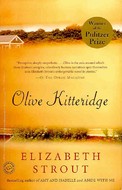
Olive Kitteridge by Elizabeth Strout is in this same style, although it’s a grouping of short stories and so doesn’t have the same effort towards a narrative line as the other two. Olive Kitteridge is set in a small town in Maine and follows both the life of Olive Kitteridge, a somewhat curmudgeonly now-retired schoolteacher, as well as the lives of a cast of characters who happen to live in the same town. The interconnected stories all mention Olive at least in passing, but are not necessarily about her in any significant way and don’t necessarily return to the same characters at any other point in the book, other than several about Olive and her husband Henry.

The challenge of such books is to create a world that feels authentic in its ordinariness, but has enough going on in it to make it interesting to read about. The first half to three-quarters of Cool Water succeeds in this venture admirably. The characters and their evolutions are delightfully understated, yet interesting—I think of the woman, mother of six kids, who swears she’ll put up the beans the next day, only to get up and find a pretext to go to town—and it’s so clear she’ll never get back in time to do the beans. I found myself relating to this character so much in this struggle that I truly don’t know if it was more funny or sad.

The problem with Cool Water is that at some point Warren decides to start making an ending for it, and as she ties up each character’s story, she loses something of the finesse of her craft, which was in listening to the characters and letting them drive the story forward. Instead, the changes they undergo towards the end seem sudden or unbelievable, or the denouement is just too self-conscious—which is jarring for a reader who was believing in the characters as people, to suddenly feel like they don’t “smell right”—that the author just needed to finish their stories.

In the end, I think Cool Water was more enjoyable in the reading of it than in thinking about it after the fact—it just doesn’t have that much to stay with you at the end of it, which is unfortunate for a book that initially had such perfectly executed emotional tensions.

Cool Water won the Governor General’s Literary Award for Fiction in 2010.
_______________________________________________

Other reviews:

A Bookworm’s World • Caribousmom • Curled Up with a Good Book and a Cup of Tea • Daisy’s Book Journal • Kate’s Bookcase • KevinfromCanada • Lindy Reads and Reviews • The Book Chick • The Gleeful Reader • The Indextrious Reader • Wise Monkeys

Guest posts by the author: A Bookworm’s World • The Book Chick • The Gleeful Reader

Interview with the author: Read, Play, Blog
_______________________________________________
Sunday, May 8, 2011

Review: Russian Winter by Daphne Kalotay

I’m trying something a bit different with this review: a new format that I hope will inspire me to write reviews more often!

Opening lines of the book:

“The afternoon was so cold, so relentlessly gray, few pedestrians passed the long island of trees dividing Commonwealth Avenue, and even the little dogs, shunted along impatiently, wore thermal coats and offended expressions.”

Why I read it:

I picked up Russian Winter by Daphne Kalotay at Book Expo America last year—someone had abandoned it in the convention centre. Although I was intrigued by the book’s blurb, I don’t read much historical fiction and I’m not that interested in ballet, so the book went to the bottom of my TBR pile, where it probably would have languished for a long time. However, I was inspired to read it when TLC Book Tours announced they would be touring the book.

What it’s about:

Russian Winter goes back and forth in time between modern-day Boston and Stalinist Russia. It’s primarily the story of Nina Revskaya, who at one time was a star of the Bolshoi Ballet. Now in her seventies, Nina has decided to auction her jewellery, including some pieces she brought with her when she defected from Russia. The story is also told from the points of view of Grigori Solodin, a Russian professor who owns an amber necklace that appears to match several of the pieces in Nina’s collection, and Drew Brooks, the associate director who is handling the jewellery auction.

What worked:

Part literary mystery, part historical adventure and part love story, Russian Winter is absorbing from the very first page. Kalotay’s characters are deftly drawn—all of them feel authentic, from Grigori’s late wife to Nina’s insufferable mother-in-law. The setting comes alive—I felt immersed in Stalinist Russia, an era I know very little about. Nina’s long-buried secrets kept me turning the pages, but I was just as interested in what would happen to Grigori and Drew.

What didn’t work:

I found this book engrossing from beginning to end, so not much didn’t work for me! I did find that Drew’s Russian connection felt a bit forced, like the author was trying a little too hard with the “we’re all connected” angle.
 
Favourite quote:

“In that way, it occurred to her, she and [X] had their work in common: behind-the-scenes, unglamorous but necessary, and best undetected. All that effort, to deliver something beautiful to the public. Of course [X]’s work took real talent, while Drew’s mainly took patience. But both were painstaking, and both required great care and the sort of focused attention that, if you allowed yourself to give in to it, and gave in to the great reward of it, became itself a form of devotion.

“The thought made Drew feel less alone, or perhaps more happily alone, sitting there cross-legged on the sofa. It was the comfort of knowing that she was not quite so strange, that there were other people who found delight in private challenges and quiet lives. People who lived in their thoughts as much as in the real, physical world. It was a reminder that true dedication to one’s work, to one’s art, was in fact—no matter how quiet or minor it might seem—a show of faith, a commitment. As for what Jen and Stephen and Kate said, that Drew spent too much time in books and in her mind, well, it was probably true. But it was also true that the internal world was an expansive one, always growing, full of possibilities that the real one did not necessarily offer.” (pp. 269-270)

Final thoughts:

I highly recommend this book, whether you are interested in ballet or not!

Thank you to Harper Collins for providing me with this book to review. (With thanks to Staci and Ana, who helped inspire my new review format.)
_______________________________________________

Russian Winter was on blog tour with TLC Book Tours in April and May. Visit these other blogs for reviews:

Library Queue • Luxury Reading • nomadreader • A Few More Pages • We Be Reading • Books Like Breathing • Chefdruck Musings • Book Addiction • red headed book child • Redlady’s Reading Room • The Calico Critic • Wordsmithsonia • Historical Tapestry • Man of la Book • In the Next Room • Life in the Thumb

Recommended review: she is too fond of books

Other reviews:

a book blog of one’s own • Beth Fish Reads • Bookfan • Booking Mama • Boston Book Bums • I’m Booking It • Kittling: Books • Lisa’s Other Bookshelf • Medieval Bookworm • Misfit Salon • Reading the Past • Red Room Library • S. Krishna’s Books • Sophisticated Dorkiness • The Black Sheep Dances • the book nest • The Crowded Leaf • Tottenville Review

Interviews with the author: Man of la Book • Tottenville Review

Guest posts by the author: Booking Mama • Book Reporter
_______________________________________________

Thursday, March 17, 2011

Review and Giveaway: Home to Woefield by Susan Juby

Home to Woefield by Susan Juby (published in Canada under the title The Woefield Poultry Collective) is the story of Prudence, a YA-author-turned-organic-farmer, who inherits a dilapidated and scrubby farm from her Great-Uncle Harold. Delighted with this opportunity to make her dreams come true, Prudence enlists the help of several locals: Earl, the gruff 70-something foreman who came with the property; her neighbour, Seth, a celebrity blogger who hasn’t left his house since an unfortunate incident involving his high-school drama teacher; and 11-year-old Sara Spratt, who’s looking for a home for her prize-winning chickens. Told in the alternating voices of these four characters, Home to Woefield is a side-splittingly funny and thoroughly modern back-to-the-land tale.

I briefly entertained the notion that I wasn’t going to like this book—for the first few chapters, I was a bit worried that Juby was making fun of her characters, who initially seemed like they were going to be caricatures of people whose passions (organic farming and blogging) are dear to my heart. For example, Seth introduces himself like this:
“Let me paint a picture for you in words. People don’t take my skills seriously, but there’s an art to it. There really is. When I was on a roll, I used to update my blogs eight, sometimes twelve hours a day. That’s eight or twelve hours of writing. Stephen King is probably one of the only other guys who writes that much. Him and James Patterson, although King’s the only one of those two worth reading. I wasn’t creating books, but there was definitely some storytelling happening. My mother used to call my blogging mental diarrhea, and my former father, Prince of Pubs, used to ask me if I was some kind of pervert because I was on the computer so much.” (p. 8)
However, it didn’t take long for me to realize how wrong I was—as it turned out, I snorted and giggled and guffawed through the whole book (and Seth turned out to be the character that cracked me up the most). I read parts of the novel out loud to Mr. B and found myself howling with laughter all over again (who knew that sheep shearing could be so funny?). Juby’s characters are wacky and original—more than once, she retells the same moment from two or three or four points of view, each as funny as the last.

Not surprisingly, this isn’t a very realistic story—although Juby does touch on some sensitive subjects such as alcoholism and family dysfunction—but it’s hilarious, quirky and sweet. If you’re in the mood for a laugh, this is the funniest book I’ve read in a long time—in fact, I can’t remember the last time a book made me laugh so much or so hard. I highly recommend it.

Thank you to Harper Collins for sending me this book to review.
_______________________________________________

Home to Woefield is on blog tour with TLC Book Tours in March. Visit these other blogs for reviews:

Sara’s Organized Chaos • BookNAround (spoiler alert) • Colloquium (spoiler alert) • A Musing Reviews • A Bookworm’s World • Rundpinne • The Lost Entwife • Reviews by Molly • Tina’s Book Reviews • Book Club Classics! • Chrisbookarama

HarperCollins Canada also organized a Woefield blog tour:

The Written Word • Shelf Candy • Daisy’s Book Journal • The Literary Word • Failing the Rorschach Test • Burning Impossibly Bright • Mrs Q Book Addict

Other reviews:

Booking Mama • faerie writer • Hey, I want to read that • Leafing Through Life • Rayment’s Reading, Rants and Ramblings

Interviews with the author: Daisy’s Book Journal • Night Owl Reviews

Check out Phase II of the Great Hen Bag Giveaway on Susan Juby’s blog. (I want that hen bag!)

Susan Juby is going to be on Blog Talk Radio with Book Club Girl on Tuesday, April 5, at 7 p.m. ET.
_______________________________________________

Would you like to win a copy of Home to Woefield? Harper Collins has offered to send a copy to one of my readers. The giveaway is open to U.S. and Canadian residents only (no P.O. boxes). I will accept entries until 11:59 PM Eastern Time on Friday, April 8.

If you are a follower or subscriber, let me know and I will give you another entry.

Make sure you provide me with a way of getting in touch with you. Entries without a blog link or email address will be disqualified.

THIS GIVEAWAY IS NOW CLOSED.
_______________________________________________

Friday, January 7, 2011

Brogan’s Review: Arlington Park by Rachel Cusk

It’s been way too long since I’ve posted one of my sister Brogan’s reviews. Without further ado, here’s her review of Arlington Park by Rachel Cusk.

I picked up Arlington Park because I’d read another book by Rachel Cusk, A Life’s Work: On Becoming a Mother, which I found quite interesting and which made me want to read one of her novels. Arlington Park is set in an upscale London suburb by the same name and follows the lives of a few families in the neighbourhood—particularly from the women’s point of view—without any particular thread between them, other than the occasional meeting or dinner date. It takes on their varying levels of disgruntlement with, and understanding of, their lives as they are.

I was reminded of Virginia Woolf’s To the Lighthouse in the way that Arlington Park is written, dramatically yet dispassionately, very “third person,” sometimes flowing into a description of the weather or the street without any connection to character at all. Also in a similar way to Woolf, Cusk at times zooms in on a small detail or a moment that becomes metaphorical even to the characters as they are living an experience:
“She gave Amanda a raffish smile with her yellowed teeth. Her small blue eyes in their striated pockets of skin twinkled with suggestion. Sometimes Amanda had seen her and Max going out for the evening and Jocasta looked beautiful. The sight of her then caused Amanda to feel that there were certain people she lacked the ability to perceive, just as she often failed to see in famous paintings what it was that they were famous for. It gave her a sensation of instability, like vertigo.
‘We’re just boring,’ Amanda said.
Jocasta looked astounded and slightly embarrassed by this reply.
‘Oh, darling!’ she cried. ‘You’re not boring—nobody’s boring! I didn’t mean to suggest that at all, you poor thing!’” (p.55)
Each chapter introduces a new character and a new point of view, until about three quarters of the way through when Cusk brings us back around to some familiar names. This rhythm feels comfortable. The different characters are all almost equally interesting, and I found myself reassured by the return of some of them so I could situate myself and return to people I cared about. However, I did find myself wanting more of them… not just in a good way, of wanting more of the book after it ended, but also wanting something more of significance. Why give us these characters, some of whom we come to care about, if they are nothing but solitary, singular, strange? What was Cusk trying to say about them, or about modern life? I felt like there was something more, and it didn’t ever manifest; she was on the cusp of saying something, but she stopped.

Some of the characters (Liz, Christine) are rather vacuous, which Cusk presents as a not-too-positive aspect of this suburban existence, but in her keenness to present them without judgement, I found myself wondering at some points how much I wanted to read about them. As they seem to learn nothing nor grow in any way during the narrative, why do I want to spend my time in reading an exact rendition of them? I also felt that because some of these characters are rather similar to each other—again, a point I think Cusk was trying to make about suburbia and our lives in it—I felt that the characters “slipped” sometimes, and I didn’t actually feel like I knew any of them, or like they had any character; whatever she wrote as coming next didn’t feel like it flowed from what had come before.

On the other hand, some interactions are rendered brilliantly, as when a few of the Arlington Park women go over to Amanda’s house and they spend the whole time talking to each other and not to Amanda (specifically about her house and her husband), not to be insulting but just as a style of conversation, which felt very real—and alienating, as I think it was meant to. Or the scenes with Juliet, one of the few recurring characters, during which she has inner dialogues with herself, trying to understand where she is in her life, her relative non-success as a mother and teacher (in that she doesn’t stand out), when as a student she was exceptional.

This book is exquisitely written, with some characters rendered in such a breathtakingly precise way that you can’t help but care about them and want to know more about them. It is trying to do something difficult, which is to ask critical questions about people who are asking very few of those questions of themselves, by portraying them exactly as they are.

I wanted more from this book than what was there, but this is definitely a worthwhile read, and I will be watching for more from Rachel Cusk.
_______________________________________________

Other reviews:

Book World • Catching Days • Curled Up with a Good Book • Eve’s Alexandria • Lovely Treez Reads • Mostly Fiction Book Reviews • Torque Control • Vulpes Libris • Women’s Literature – Book Reviews
_______________________________________________

Wednesday, November 10, 2010

Green Books Campaign Review: The Find by Kathy Page

This review is part of the Green Books Campaign. Today 200 bloggers take a stand to support books printed in an eco-friendly manner by simultaneously publishing reviews of 200 books printed on recycled or FSC-certified paper. By turning a spotlight on books printed using eco- friendly paper, we hope to raise the awareness of book buyers and encourage everyone to take the environment into consideration when purchasing books.

The campaign is organized for the second time by Eco-Libris, a green company working to make reading more sustainable. We invite you to join the discussion on “green” books and support books printed in an eco-friendly manner! A full list of participating blogs and links to their reviews is available on the Eco-Libris website.

The Find was printed on FSC-certified paper from mixed sources that’s 99% recycled (including the cover) and Ancient Forest Friendly. For more information about the environmental characteristics of the paper used to print The Find and to take the green book quiz, visit Webcom, the print provider for McArthur & Company Publishing.
_______________________________________________

The Find by Kathy Page is the story of Anna, a palaeontologist with a secret who makes an amazing discovery, and Scott, a high-school dropout who is caring for his alcoholic father. A chance meeting between the two leads Anna to confide in Scott and later ask him to join her on her dig. As both internal and external conflicts plague the project, Anna becomes increasingly dependent on Scott.

I haven’t been reading much fiction lately, so I approached this novel with some trepidation, almost convincing myself in advance that I wouldn’t like it. However, from the first chapter, Page’s vivid descriptions pulled me right into Anna and Scott’s world. Here, for example, is an excerpt from the opening scene: “Outside: a wall of water, the deafening roar of a million tiny parts. The rain sang and drummed, raced downwards, pooled, spurted from guttering, burst in gurgling torrents from downspouts, bubbled from blocked drains” (p. 9). (Can’t you hear that rain?) As mentioned in the blurb on the back of the book, The Find is a complex story about “discovery, inheritance and fate”—it’s a multifaceted novel that almost reads like a literary thriller. (I stayed up late at night to finish it!)

There are a multitude of characters in this book—much more so than in many novels (where main characters often seem to know such a limited number of people). Anna especially is surrounded by friends, family and colleagues, which I occasionally found confusing, as I had trouble keeping some of the more minor characters straight. By the same token, their inclusion in the story helps to ground it in reality and makes the ending of the book all the more poignant.

My favourite quote:
“It seemed to her that life was sometimes terrifying, at other times shot through with bliss. So much in it, all at once: the creep of continental plates, the code in your genes, the smell of cooking, the memory of your mother’s voice calling you out of your dream. Extinctions and creations. The rush of birdsong at dawn. A woman’s belly, tight with the life inside. There were so many discoveries: those you went looking for, yearned for so much that it hurt, and others which lay waiting and which, if you knew of them, you’d do anything to escape, and behind each of them, another. A switchback ride, a dream of flight.” (p. 157)
The Find offers the best of all worlds: descriptions that draw you in without distracting from the story, realistic characters who face difficult choices, and a complex plot that keeps you turning the pages until the very end—with the added bonus that it’s published on one of the greenest types of text paper available. I highly recommend this book, especially if you are a fan of Michelle Richmond or Janette Turner Hospital.

Thank you to Eco-Libris for organizing the Green Book Campaign and to McArthur & Company for sending me this book to review.
_______________________________________________

Other review: Geranium Cat’s Bookshelf (which gives away a lot more of the plot than I did!)

Interview with the author: BookClubBuddy
_______________________________________________

Friday, October 22, 2010

Review: Up from the Blue by Susan Henderson

Up from the Blue by Susan Henderson is the story of Tillie Harris told from two turning points in her life: as an adult when she is about to give birth to her first child and as an eight-year-old child the year when everything changed for her family.

I loved the first half of this book. Tillie is an insightful and imaginative child coping with a difficult home life as best she can, desperately holding on (or inventing) any good moments her family has:
“The parade music jiggled my insides, and lifted the hair up on my arms. I wanted to be the girl with the pom poms tied to her shoes, jabbing a baton at the sky. I danced along behind my father, danced to the womp-womping of the tuba, the wild drumming. I trotted with fancy steps, keeping my eyes on my father’s hand, held out to the side with his fingers spread apart. If I could only catch up, I knew he’d take hold.” (pp. 20-21)
I was completely drawn into this story: it was one of those books that I itched to pick up again as soon as I put it down. Although I didn’t totally identify with Tillie (I was definitely a “good girl” as a child, while Tillie is constantly getting into trouble, both at home and at school), I could certainly identify with her loneliness and sense of alienation.

Unfortunately, midway through the book, my disbelief came crashing down around me: what happened to Tillie’s mother didn’t seem plausible to me, and as Tillie unravelled the events of that year, she no longer seemed believable as an eight-year-old narrator. One could argue that Tillie was only metaphorically eight years old—that at some level the adult Tillie was trapped in that traumatic year when everything changed—which would explain her mature thinking about what happened to her and her mother. Although this does make sense, I still can’t quite buy some of the plot twists. However, despite my disappointment at where the story goes, Henderson has crafted an absorbing debut novel, and I look forward to reading whatever she writes next.

Thank you to Harper Collins for providing me with this book to review.
_______________________________________________

Up from the Blue was on blog tour with TLC Book Tours in September and October. Visit these other blogs for reviews:

The Zen Leaf
• Sara’s Organized Chaos • Musings of a Bookish Kitty • Reviews from the Heart • Rundpinne • Books Like Breathing • In the Next Room • Raging Bibliomania • Life in Review • Peeking Between the Pages • lit*chick • Booksie’s Blog

Other reviews:

A Musing Reviews • Bibliophilic Book Blog • Booking Mama • Dan’s Journal • Fizzy Thoughts • Hey, I want to read that • KellyVision • largehearted boy • Literary Kicks • my books. my life. • The Best Damn Creative Writing Blog • The Book Pirate

Excerpt from the first chapter of the book: The House with the Blue Door

Two of my favourite quotes: Teaser Tuesday (on my blog)
_______________________________________________

Thursday, October 7, 2010

Review: The Lacuna by Barbara Kingsolver

The Lacuna by Barbara Kingsolver Barbara Kingsolver is one of my favourite authors, so when I was asked if I wanted to review her latest novel, The Lacuna, I jumped at the chance. But then the book sat unread on my shelf for ages—I felt intimidated by its size and its “historical fiction-ness.”

The Lacuna, Kingsolver’s most ambitious novel to date, is the fictional memoir of Harrison William Shepherd, a half-Mexican, half-American boy growing up in the early twentieth century. Kingsolver paints this story on a wide canvas that stretches from Mexico to the U.S., from 1929 to the 1950s and from the Great Depression to the McCarthy era and the heights of yellow journalism. Told mainly through journal entries, letters and newspaper clippings (both real and fictional), The Lacuna seamlessly blends historical fact with fiction. Many of the characters are recognizable historical figures (Frida Kalho, Diego Rivera and Leon [Lev] Trotsky being the main ones). I know relatively little about this period in history, but it’s clear that Kingsolver has thoroughly researched it, and she immerses her readers in the sights and sounds of this period, sprinkling the text with both American slang and Spanish words. (Though I made a list of over 100 terms I was unfamiliar with, for the most part they are understandable enough from the context or explained within the novel—I just wanted to look up what they meant exactly.)

In many ways, Shepherd nearly writes himself out of his own narrative—in his journal entries, he often refers to himself in the third person—but this device works (mostly) as he is very much an observer of the events transpiring around him, especially as a child and young man. My favourite section of the book is set in Mexico during the time he spent with Frida and Diego—Frida is especially memorable: prickly and yet sympathetic, her character leapt off the page.

However, Shepherd’s later life in the U.S. fell a bit flat for me: his self-effacing habits became somewhat frustrating because it is in this period that he is most actively affected by historical events (or at least more participant than observer)—the highlights of this section were his vivid letters to Frida.

These are a few of my favourite quotes, to illustrate the richness of Kingsolver’s language:

“An imperfectly remembered life is a useless treachery. Every day, more fragments of the past roll around heavily in the chambers of an empty brain, shedding bits of color, a sentence or a fragrance, something that changes and then disappears. It drops like a stone to the bottom of the cave.” (p. 258)
“I didn’t say what Frida would have. That you can’t really know the person standing before you, because always there is some missing piece: the birthday like an invisible piñata hanging great and silent over his head, as he stands in his slippers boiling the water for coffee. The scarred, shrunken leg hidden under a green silk dress. A wife and son back in France. Something you never knew. That is the heart of the story.” (p. 325)
I want to say more about the epic scope of this book, which deals with themes of identity and the intersection of art and politics (among other things), but I already feel like I’m giving away too much of the plot. Suffice it to say that The Lacuna is a breathtaking story, well worth reading (which I devoured in three days in the end!).

Thank you to Harper Collins for sending me this book to review.
_______________________________________________

The Lacuna is on blog tour with TLC Book Tours in September and October (along with several other of Kingsolver’s books). Visit these other blogs for reviews:

Lit and Life • Presenting Lenore • ’Til We Read Again • Raging Bibliomania* • The Lost Entwife • In the Next Room • Bookworm’s Dinner

*Skip the first paragraph to avoid spoilers.

Other reviews:

A Book Sanctuary • Amused, Bemused, and Confused • Fyrefly’s Book Blog • Mari Reads • Ratskellar Reads • The Parenthesis and the Footnote
_______________________________________________

Friday, July 30, 2010

Review: Hidden Wives by Claire Avery

Hidden Wives by Claire Avery is the story of half-sisters Sara and Rachel, who are members of the Blood of the Lamb polygamous community. At 15, both are of an age to be married: Sara has been promised to her uncle (as his fifth wife), while the prophet is still praying about the fate of beautiful Rachel.

One of the joys of reading is immersing yourself in a book to the point where you forget you’re reading. Hidden Wives started off promisingly, hooking me with the following sentences:
“For as long as Sara could remember, she jolted awake every morning, startled to be alive. Whenever her father looked at her, she imagined him calculating the width of her neck and the degree of pressure he would have to exert in order to snap it.” (p. 11)
Unfortunately, almost immediately, Avery’s writing style tripped me up, so I felt I couldn’t get past the words into Sara and Rachel’s world. Over and over, the odd imagery took me out of the story (“It was a big, toothy grin that split his cheeks in two like a cracked egg” [pp. 11-12]; “Her arms would drip over the ends of her chair like wet diapers . . .” [p. 114]; “His teeth were a gallery of grays and yellows . . . splayed outward like badly hung paintings” [pp. 130-131]). I read the first third of the book with a notebook nearby, jotting down all the strange turns of phrases and incorrectly used words. The middle of the book picked up, and I found myself more drawn into the story, wanting to know what would happen to the sisters; however, I still couldn’t shake the feeling that the book’s message—that polygamy hurts women and children, and that something should be done about it—trumped the storytelling. The clearest example of this is the subplot involving Sara’s best friend, Ruth, who appears at one point in the novel so Sara (and the reader) can learn something about the dangers of close-kin marriages; once the point has been made, Ruth promptly disappears as a character in the book. I also unfortunately anticipated many of the plot twists (several were foreshadowed only moments before they happened), and the ending struck me as wishful thinking rather than a likely outcome to this story.

There is no question that it’s shocking that the type of human rights abuses detailed in this book are tolerated in the name of religious freedom in North America today. However, if you want to learn more about polygamy, I would recommend that you read Under the Banner of Heaven: A Story of Violent Faith by Jon Krakauer, The 19th Wife by David Ebershoff (read my review) or The Chosen One by Carol Lynch Williams instead.

I am very much in the minority in not liking this book; every single one of the reviews mentioned below is positive!

Thank you to Forge Books for sending me this book to review.
_______________________________________________

Hidden Wives was on blog tour with TLC Book Tours in July. Visit these other blogs for reviews:

Rundpinne • Luxury Reading • Novel Whore • Simply Stacie • Trisha’s Book Blog • Thoughts from an Evil Overlord • Bibliofreak • Book Club Classics • Crazy for Books • S. Krishna’s Books • It’s All about Books • All about {n} • Life in the Thumb • Scraps of Life • Stiletto Storytime • Joyfully Retired

Other reviews:

Amy’s Book Obsession • Life Is Short. Read Fast. • Lu’s Raves and Rants • Queen of Happy Endings • Reading on a Rainy Day

Interview with the authors, Michelle Poche and Mari Hilburn (who write under the pen name Claire Avery): Life Is Short. Read Fast.
_______________________________________________

Friday, March 26, 2010

Review: Conscience Point by Erica Abeel

Conscience Point by Erica Abeel is the story of Maddy Shaye, a woman “with all the luck,” who seems to have it all: she has a successful career as both a concert pianist and an arts reporter, is in love with adoring Nick and has a close relationship with her grown daughter Laila. But then everything starts to unravel...

Eight pages into Conscience Point, I nearly gave up on it: Abeel’s overuse of ellipsis points was driving me crazy (they appear about 20 times in those eight pages), plus the sex scene made me cringe.* Luckily, I chastised myself for my lack of perseverance–surely the book deserved at least a 50-page chance!—and picked it up again. Ironically enough, after page 8, the ellipses all but disappear and the story quickly picks up the pace.

Although the book is mostly written in the third person, it begins with—and occasionally lapses into—a first-person segment that make it clear that Maddie is actually writing her own story, a “faux memoir,” as she calls it. This device worked well: although I sometimes found the writing style frustratingly cryptic (or at least there were many references that sailed over my head), Maddie’s character is so well developed and so believable that it was Maddie I was frustrated with and not Abeel.

My favourite part of the story was the Gothic mystery—in the end I tore through the book to find out what had happened—and this despite the fact that I found the idea of the love triangle fairly distasteful. Although this book was not an easy read—it was definitely outside my comfort zone—I’m glad I gave it a second chance.

To read other reviews of this book, visit these blogs:
Booking Mama • Bookstack • Diary of an Eccentric • Linus’s Blanket • Literary License • Savvy Verse & Wit • S. Krishna’s Books

To read an interview with the author, visit this site:
Novel Journey

Thank you to the author for sending me this book to review.

This book review is part of the Spotlight Series tour for Unbridled Books. Visit the Spotlight Series site for a list of other tour stops.

*I later reread it and it didn’t seem that bad.

Friday, October 30, 2009

A Change in Altitude by Anita Shreve (a review)

A Change in Altitude by Anita Shreve is the story of newlywed Margaret, who follows her husband Patrick to Kenya shortly after their marriage. Once there, they meet a British couple, Arthur and Diana, who invite them to join a climbing expedition up Mount Kenya with another couple. The trip ends in tragedy, which causes Margaret to reevaluate her life and her marriage.

Last year, I read Testimony, Shreve’s previous novel, and was quite disappointed to find myself not enjoying it because I consider Shreve to be one of my favourite authors (read my review). Unfortunately, I felt the same way about this novel: the story failed to engage me. Although Margaret is a sympathetic character, I never connected with her. It seemed to me that Shreve kept her at arm’s length; I wanted to get into her head more. And the tragedy unfortunately struck me as a bit ridiculous—I felt impatient with the character who felt responsible for what happened, when it seemed clear to me that responsibility lay elsewhere (how’s that for not giving anything away?). Worse still, despite the liberal sprinkling of African words throughout the novel (so much so that I wished there was a glossary included in the book) and despite the fact that Shreve actually lived in Kenya for several years, the country never really came alive for me. Instead, the subplot involving Arthur and Diana’s servants felt predictable and forced. Overall, I wish I’d followed my own advice (which I mentioned in my review of Testimony): skip the latest Shreve book and read one of her earlier ones instead.

To read other reviews (many of them more favourable than mine), head over to these blogs:
A Novel Menagerie • Bibliophile by the Sea • Book Nook Club • Foreign Circus Library • Jo-Jo Loves to Read • Laura’s Reviews • Luxury Reading • Presenting Lenore • S. Krishna’s Books

Thank you to Hachette for sending me this book to review.

Friday, July 10, 2009

The Local News by Miriam Gershow (a review)

The Local News by Miriam GershowThe Local News by Miriam Gershow is the story of 15-year-old Lydia Pasternak whose older brother Danny has disappeared. While Danny was athletic and popular (and not particularly bright), Lydia is smart and most definitely not popular, at least not until Danny disappears. I started this book with some trepidation: for one thing, I was feeling a bit tired of the “missing person” plot; for another, I had read Tara’s review at Books and Cooks, which she concluded by saying: “So, The Local News was not really for me, but if you’re interested in the story it’s certainly well done.” Although I wasn’t that interested in the setup, in the end I’m very glad I read the book because it’s less about Danny’s disappearance than it is about Lydia’s experience of high school.

More specifically, Gershow perfectly captures the crazy changeable nature of high school where it is possible, from one day to the next, to go from superfreak to member of the in-crowd and where friendships are sometime dictated more by circumstance and proximity than by shared interests or genuine connection. Only very occasionally did I feel like Gershow missed the mark, as, for example, when Lydia has this thought: “This grandiose treatment, the stuff of only the most ambitious and helpful of suicide ideations, only elevated the situation to the realm of [the] surreal” (p. 272). Although this was presumably supposed to be the thought of adult rather than teenage Lydia, the language used completely pulled me out of this fairly intense moment.

Now here’s the weird part. I read the end of this book in a teashop after our next-to-last blogger meet-up. A song came on that made me jump up and ask the waitress what it was. It turned out she’d started playing the soundtrack to the movie Le peuple migrateur (Winged Migration in English)—and so the whole soundtrack played in the background as I finished the book.* As I listened and read, I had the weirdest sensation, as if a space had opened up in my chest from throat to heart. And I felt like I knew Lydia from the inside out: I became her. I recently read an interview with poet Peter Levitt, who said: “There is no experience of ‘writer’ and ‘writing’ as distinct or separate entities, no subject and object. That duality collapses and there is just the activity itself.” Something similar happened to me in that teashop: there was no me separate from the story I was reading. In a guest post at Everyday I Write the Book, Gershow said, “Over and over, I try to write my way back into that experience [of high school] and out the other side of it.” For the me that briefly became Lydia, I think she succeeded.

*Needless to say, I listened to “To Be by Your Side” by Nick Cave, the first song on this soundtrack, over and over as I wrote this review.

Read other reviews of this book at these blogs:
Age 30+ ... A Lifetime of Books • a lovely shore breeze • Becky’s Book Reviews • Book Club Classics • Bookopolis • Books and Cooks • books i done read • Books on the Brain • Boston Bibliophile • Caribousmom • Constance Reader • Every Day I Write the Book • Lit and Life • Stephanie’s Written Word

For interviews with the author, visit these blogs:
Becky’s Book Reviews • Manic Mommies Book Club • Paper Fort • Worducopia

For guest posts by the author, visit these blogs:
Books on the Brain • Caribousmom • Every Day I Write the Book

Thank you to Spiegel & Grau for sending me this book to review.

New Authors Challenge button
This is the ninth book I review for the New Authors Challenge.

Monday, June 29, 2009

Katherine’s Wish by Linda Lappin (a review)

Katherine's Wish by Linda LappinKatherine’s Wish by Linda Lappin is a fictionalized account of the last five years of the writer Katherine Mansfield’s life, from 1918 to 1923, told from the alternating points of view of Mansfield herself; her husband, John Middleton Murry; and her companion, Ida Constance Baker. During that time, Mansfield lived in France, England, Italy and Switzerland, ever in search of a place to both write and recover from the tuberculosis that would eventually kill her.

I found the first part of this book a bit hard to get into. Not only do all three of the main characters come across as unlikeable, but Lappin also seems to be cramming in background information about Mansfield in a way that feels forced, given the structure of the novel. This results in passages like this one:
Upon her return, [Katherine] would put an end to all that [Murry’s affairs], by marrying Murry, once her divorce from George Bowden came through at last. What a terrible mistake that had been: marrying Bowden on the spur of the moment, simply because he adored her and seemed so well-connected. Of course, that wasn’t the real reason she had let George rush her to the altar. The real reason had been the fatherless child in her womb, Garnet’s child, the baby she had lost later in Bavaria. And that had all been Mother’s fault. She would never have miscarried if Mother hadn’t sent her to that dreadful spa to get her away from Ida. (p. 12)
This feels disjointed and I would imagine very confusing to someone who is unfamiliar with Mansfield’s history.

Luckily, once the stage is set, the narrative focuses on the novel’s present (1918-1923) and flows much more smoothly. Although I’m not familiar enough with Mansfield’s writing to judge whether Lappin was successful in reproducing her style, I certainly felt like I was getting a glimpse into Mansfield’s mind. Above all, Lappin captures Mansfield’s fierce desire to write despite all odds and at whatever cost—these were my favourite parts of the book. Here, for example, are some of (the fictionalized) Mansfield’s thoughts on writing:
Certainly there was nothing like it: to be divided always into two or more, a multitude of selves. To be the detached observer, sitting in a carriage, driving along the sea, clinging to the cold handle of the carriage door, smelling the tang of salt in the air, and at the very same instant to hang suspended in the silver flash of rain against a smoky sky, to be scattered in the foam blowing along the strand. . . . Passenger and driver, the little boy in a blue cape, nibbling strawberries at the roadside, the high-stepping horse and the roiling sea were all parts of herself. (p. 170)
And here is (the fictionalized) Virginia Woolf describing her journal to Mansfield:
‘It’s like a madwoman’s dream, or like a deep drawer in an old desk where I collect shreds and scraps of my daily impressions which I later reassemble in obsessive experiments.’ (p. 154)
Lappin writes with such compassion for her characters that I soon forgot that I had initially found them unlikeable (with the exception perhaps of Murry). As the end of the novel neared, I found myself almost hoping that it would end differently, that Mansfield would somehow be given more time.

Check out these sites for other reviews of Katherine’s Wish:
Absinthe Minded • Perigee: Publication for the Arts • Rain Taxi

Also visit Sheri’s blog for a guest post by the author:
Bookopolis

Katherine’s Wish won the Gold Medal for Historical Fiction at the 2009 IPPY Awards as well as an honorable mention for the Eric Hoffer Award in 2009. It was also a finalist for the 2008 ForeWord Book of the Year Award.

Are you interested in reading this book? Author Linda Lappin has generously offered to send a copy of this novel to one of my readers in Canada, the U.S. or Europe. She has also offered to send a copy of her first novel, The Etruscan, to another reader. Come back tomorrow for all the details.

Thank you to Linda Lappin for sending me this book to review.


This is the eighth book I review for the New Authors Challenge.